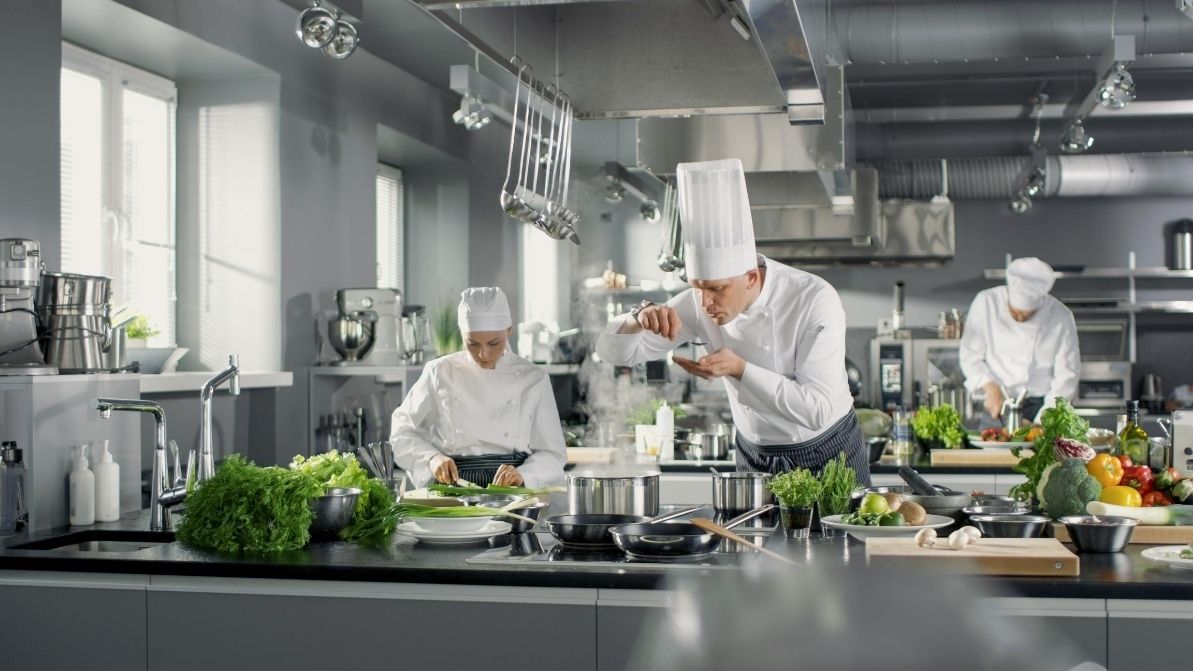
The hotel kitchen has undergone a fundamental transformation in recent years. Whereas the focus was traditionally on craftsmanship, recipes and preparation methods, success is now increasingly determined by the way processes are organised. This is entirely due to the changing role of food & beverage within hotels.
According to Koninklijke Horeca Nederland, staff shortages remain one of the biggest challenges facing the hospitality sector. At the same time, hotels are facing rising operational costs and higher expectations from guests. As a result, there is a growing focus on process optimisation, efficiency and labour-saving methods within hotel operations.
A modern hotel kitchen is rarely responsible solely for the restaurant any more. In the course of a single day, the same teams may be involved in breakfast service, room service, conference catering, events, banqueting and à la carte concepts. At the same time, guests expect the same quality, regardless of the time of day or the channel through which they place their order.
It is precisely for this reason that the focus is shifting from cooking to organisation. The most successful hotel kitchens distinguish themselves not only by what they prepare, but above all by how they have organised their operations.
Guests’ expectations go beyond the menu
Nowadays, hotel guests do not just compare their experience with other hotels. They compare breakfast with their favourite coffee shop, room service with a premium delivery service, and a business lunch with the quality they are used to from specialist catering concepts. This raises the bar for hotels higher than ever before.
Guests expect speed, availability and consistency, regardless of when they use a facility. Behind this seemingly straightforward experience lies a complex organisation in which planning, logistics and collaboration play an increasingly important role. Anyone looking at a modern hotel kitchen therefore sees not only a culinary environment, but also an operational hub where countless processes converge.
The biggest challenge in a hotel kitchen often lies outside the kitchen itself
When discussing the performance of a hotel kitchen, the conversation often centres on chefs, menu development or purchase prices. Whilst these topics remain important, a large part of the day-to-day pressure stems from processes that guests never see.
The modern hotel kitchen serves as the hub of various operational workflows. Raw materials must be available at the right time, workstations must be optimally organised, and supporting processes must link together seamlessly. As soon as one of these elements falters, delays arise that can spread throughout the entire operation.
These include:
- Preparing workstations.
- Internal logistics processes.
- Storage and accessibility of supplies.
- Cleaning and hygiene procedures.
- Food safety.
- Waste management.
- The availability of equipment and consumables.
It is precisely within these processes that the difference often lies between a kitchen that is constantly playing catch-up and one that remains in control, even during peak times.
Structure determines performance
In an increasing number of hotels, the focus is shifting from the recipe to the process. Not because the quality of dishes is becoming less important, but because a good dish only has value when it reaches the guest at the right time, in the right place and to the right standard.
Every extra trip, search or interruption may seem minor in itself. Consider, for example, a member of staff who has to walk to a storeroom several times during a breakfast service to restock supplies. On its own, this takes only a few minutes. However, when this happens several times a day and is carried out by different staff members, the impact on productivity and workload can be significant. Structure and standardisation are therefore becoming increasingly important tools for balancing quality and speed.
Staff shortages make process optimisation essential
Virtually every hotel organisation faces challenges in the labour market. Recruiting and retaining qualified staff remains difficult, whilst at the same time the pressure on existing teams is increasing. The instinct is often to look for additional staff, but more and more organisations are discovering that increasing staff numbers does not automatically lead to better performance.
After all, an inefficient process remains inefficient, regardless of the number of people working on it. That is why the focus is increasingly shifting towards process optimisation. Hotels are analysing where time is being wasted, which tasks add little value and how work can be organised more efficiently.
The aim is not to make staff work harder, but to ensure that they spend their time on activities that genuinely contribute to quality and guest satisfaction.
This shift is not temporary. Whereas in the past hotels could often compensate for staff shortages by bringing in extra staff, this is becoming increasingly difficult in many cases. As a result, organisations are taking a more critical look at processes that were taken for granted for many years. The focus is no longer on how many staff are available, but on how available capacity can be utilised as effectively as possible.
This leads to a broader approach to operational management, which considers not only staff planning but also routing, workplace organisation, standardisation and support for staff during peak periods.
The difference often lies in the organisation, not in the staffing levels
Two hotel kitchens may have a similar team yet achieve completely different results. In practice, the difference often lies in workflow, preparation, working methods and the availability of materials and equipment.
In other words: operational quality is not solely down to people, but also to the environment in which they work. That is precisely why successful hotels look beyond staff numbers alone.
Time is often wasted on small tasks
When organisations consider efficiency, they often look to major investments or radical changes. In reality, a great deal of time is wasted on small, repetitive tasks that occur every day. Staff walk to storage areas, search for supplies, wait for restocks or carry out tasks that could have been organised more efficiently.
Taken individually, these moments may seem harmless. But when dozens of staff members lose a few minutes every day on such activities, the cumulative effect adds up quickly. On an annual basis, this can amount to hundreds of hours not spent on tasks that directly add value for the guest.
Every minute counts during peak times
It is precisely during breakfast service, busy conference days or major events that the importance of operational efficiency becomes apparent. At such times, even minor disruptions can have major consequences for productivity, quality and workload.
A process that takes just a few extra minutes on a quiet day can become a real bottleneck during peak periods. That is why more and more hotels are focusing not only on performance under normal conditions, but specifically on how processes function when the pressure is at its highest.
Hygiene and efficiency increasingly go hand in hand
Hygiene and food safety are often seen as basic requirements, but within modern hotel kitchens they play an increasingly important role in the broader context of operational efficiency. After all, a well-organised working environment makes it easier to follow procedures, minimise risks and ensure quality standards are met.
The opposite is also true. When workstations are cluttered or processes are unclear, not only does the risk of errors increase, but so does the workload for staff. As a result, efficiency and hygiene are becoming less and less separate issues and increasingly part of the same operational challenge.
An organised workplace supports quality
When staff have quick access to the right resources and processes are organised logically, this creates a sense of calm within the operation. This calm not only translates into higher productivity, but also into a more consistent level of quality.
Well-organised kitchens make it easier to maintain standards, train new staff and cope with peak periods without compromising the guest experience.
The role of disposables and consumables is underestimated
Many hotels seek efficiency gains through new equipment, software or staff planning. However, a significant part of operational performance actually stems from support processes. The availability of hygiene solutions, cleaning products, disposables and other consumables plays a key role in determining how smoothly day-to-day operations run.
Precisely because these resources seem so self-evident, they are regularly overlooked in process optimisation initiatives. Yet staff rely on the availability, accessibility and user-friendliness of these resources every day to be able to work efficiently.
When the conversation turns to efficiency, the focus often shifts to equipment, automation or staff deployment. Yet the impact of everyday consumables is regularly underestimated.
Hygiene products, cleaning products, packaging, gloves, napkins and other supplies may seem minor in themselves. Yet they form the building blocks of countless processes that take place daily in a hotel kitchen.
When these resources are insufficiently available or not logically integrated into operations, this creates additional complexity. When they form part of a well-thought-out system, however, they actually support speed, safety and ease of use.
Small tools often have a big impact
Many operational improvements do not result from major investments, but from organising existing processes more efficiently. By taking a critical look at daily routines and support resources, organisations often discover opportunities that have gone unnoticed for years.
It is precisely at this level that operational excellence becomes evident.
The best hotel kitchens operate like logistics organisations
The most successful hotel kitchens look beyond cooking alone. They analyse the entire journey of a product, from receipt and storage to preparation, serving and cleaning. By providing insight into this entire chain, a clearer picture emerges of where delays, inefficiencies or risks arise.
This approach ensures that kitchens not only operate more efficiently, but are also better prepared for growth, seasonal peaks and changing guest expectations. The focus thus shifts from reacting to anticipating.
Hospitality begins behind the scenes
For guests, a well-run kitchen seems like a given. Behind that experience, however, lies a complex organisation in which timing, collaboration and structure play a crucial role. The better these processes are organised, the easier it is for teams to focus on what hospitality is ultimately all about: creating an excellent guest experience.
How can you make a hotel kitchen more efficient?
Although every hotel organisation is different, there are a number of recurring factors that determine operational performance within professional kitchens. Hotels that operate efficiently do not focus solely on capacity, but primarily on reducing waste of time, movement and resources.
In practice, this often begins with analysing daily processes. Where do delays occur? Which tasks are unnecessarily repeated? Which materials are not immediately available at the workplace? It is precisely these minor disruptions that often have a greater impact than organisations initially anticipate.
Successful hotels therefore pay systematic attention to:
- Logical layout of workstations.
- Efficient storage of materials and consumables.
- Clear working arrangements and standards.
- Short and clearly laid-out walking routes.
- Process analyses during peak periods.
- Supporting staff with the right tools.
The aim is not to make staff work harder, but to eliminate unnecessary tasks. The less time wasted on searching, waiting and moving around, the more attention can be devoted to quality and hospitality.
The future of the hotel kitchen is all about simplicity
The pressure on hotel kitchens is expected to increase further in the coming years. Staff remain in short supply, operational costs are rising and guests expect more flexibility than ever before. At the same time, the need for consistent quality and reliable service is growing.
As a result, the ability to keep processes clear and manageable is becoming an increasingly important factor for success. Hotels that succeed in reducing complexity create space for staff to focus on quality, hospitality and the guest experience.
The most successful hotel kitchens of the future are therefore not necessarily the largest, most expensive or most innovative kitchens. They are the kitchens where people, processes and support resources work together optimally. Because ultimately, an excellent guest experience does not begin at the table, but behind the scenes.
Frequently asked questions
1. Why is efficiency becoming increasingly important in hotel kitchens?
Hotel kitchens are facing rising costs, staff shortages and higher guest expectations. Efficient processes help to maintain quality without placing additional pressure on staff.
2. What is meant by a hotel kitchen as a logistical operation?
This means that success depends not only on cooking, but also on processes such as storage, routing, planning, hygiene, availability of supplies and inter-departmental collaboration.
3. How can hotel kitchens operate more efficiently?
By analysing work processes, reducing unnecessary steps, organising materials logically and ensuring clear standards within the operation.
4. How does staff shortage affect kitchen operations?
With limited staffing levels, it is particularly important to organise processes efficiently. This enables staff to add more value without increasing their workload.
5. Why are hygiene and efficiency closely linked?
An organised working environment makes it easier to work hygienically, follow procedures and maintain quality standards.
6. What role do consumables play in a hotel kitchen?
Consumables such as cleaning products, gloves, packaging and hygiene products support day-to-day processes and have a direct impact on safety, speed and ease of use.
7. Where is time often wasted unnecessarily in hotel kitchens?
A great deal of time is wasted searching for supplies, due to inefficient routing, redundant tasks and processes that are not optimally organised.
8. Why is process optimisation becoming increasingly important for hotels?
As hotels face greater operational pressures and rising guest expectations, smarter processes help to strike a better balance between quality and efficiency.